


10/27/2014
Designers speak out on Adobe price controversy
"But today there was one serious news story we couldn't avoid reporting on: the fact that Adobe is openly offering different prices for its subscription services depending what browser/device they're using. (The fix seems to be to flush your cookies or use private browsing, but that's little comfort for anyone who's already paid a higher price for their subscription).
As expected, the reaction from the designer community has been swift and damning, and the controversy has opened up a huge can of worms around the subject of Adobe's pricing model. Here we've picked a selection of tweets, which offer a fascinating insight into the different perspectives on the controversy..."
At http://www.creativebloq.com/adobe/designers-speak-out-adobe-pricing-101413297.
As expected, the reaction from the designer community has been swift and damning, and the controversy has opened up a huge can of worms around the subject of Adobe's pricing model. Here we've picked a selection of tweets, which offer a fascinating insight into the different perspectives on the controversy..."
At http://www.creativebloq.com/adobe/designers-speak-out-adobe-pricing-101413297.
10/24/2014


10/23/2014


10/22/2014


Inkscape

"Inkscape is a professional vector graphics editor for Windows, Mac OS X and Linux. It's free and open source."
Download at http://inkscape.org/en/.
More info at http://en.wikipedia.org/wiki/Inkscape.
Inkscape: Guide to a Vector Drawing Program

"This book serves as both a textbook and a reference for using Inkscape to produce high-quality drawings. It includes a series of tutorials followed by chapters that cover completely each facet of the Inkscape program. The book is full of tips and notes to enable the user to make the best use of the program."
Inkscape: Guide to a Vector Drawing Program at http://tavmjong.free.fr/INKSCAPE/MANUAL/html/.
Filename extension
A filename extension is a suffix (separated from the base filename by a dot or space) to the name of a computer file applied to indicate the encoding (file format) of its contents or usage. Examples of filename extensions are .png, .jpeg, .exe, .dmg and .txt.
At http://en.wikipedia.org/wiki/Filename_extension.
At http://en.wikipedia.org/wiki/Filename_extension.
10/21/2014
The Ultimate Guide To Cloning In Photoshop

"Photoshop’s wide array of cloning tools is the cause of many of the absolute best and worst works created with the application. In a skilled and experienced hand, these tools lead to phenomenal results. In the hands of a careless artist, Photoshop cloning can be disastrous to the credibility of the result. This article introduces the several cloning tools available in Photoshop and goes over the proper usage and best practices of each."
At http://www.smashingmagazine.com/2010/03/30/the-ultimate-guide-to-cloning-in-photoshop/.

10/19/2014
Export to TIFF

A fim de reduzir o tamanho do ficheiro a ser submetido no moodle, ao exportar para TIFF deverão cumprir as especificações acima ilustradas. O resultado será uma cópia da imagem em TIFF, sem layers, e que não deverá ocupar mais do que 50 Mb.
Bom trabalho a todos,
pc.
10/17/2014


10/16/2014


"One Surprising Reason Computer Screens Aren't Green-On-Black Anymore"
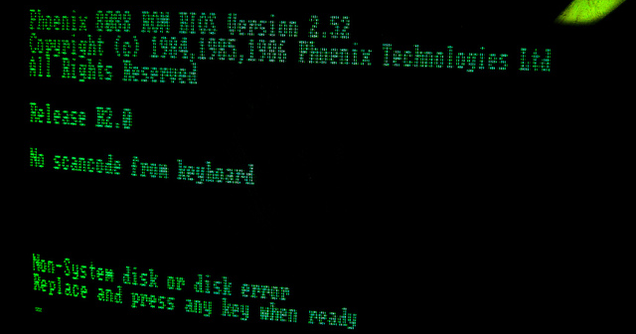
"In the early days of personal computing—think UNIX early—text was often white or green on a black screen. That didn't last long, of course, but there's a little-known reason that those shadowy screens weren't ideal for users. And it has to do with your poor eyesight.
First of all, for those of us who weren't around back then, a brief primer on how our LCD or plasma screens differ from those black-screened consoles of yore. These monitors used cathode ray tubes to shoot electrons at a fluorescent screen to produce pixels. Inside, these screens were coated with phosphor—a material that glows when struck with radiation (like the electrons), each creating a pixel of light. These early screens used a type of phosphor that emitted a greenish, yellowish glow—hence the early Matrix-style green-against-black monitors.
Later on, technology would advance to the point where each dot of light would contain a red, blue, and green phosphor, giving us color monitors. But considering that we started off computing on black backgrounds, what caused the switch over?"
At http://gizmodo.com/the-surprising-reason-computer-screens-arent-green-on-b-1643025374.
Subscribe to:
Posts (Atom)